
Staffing Crisis or Systems Crisis?
June 11, 2026
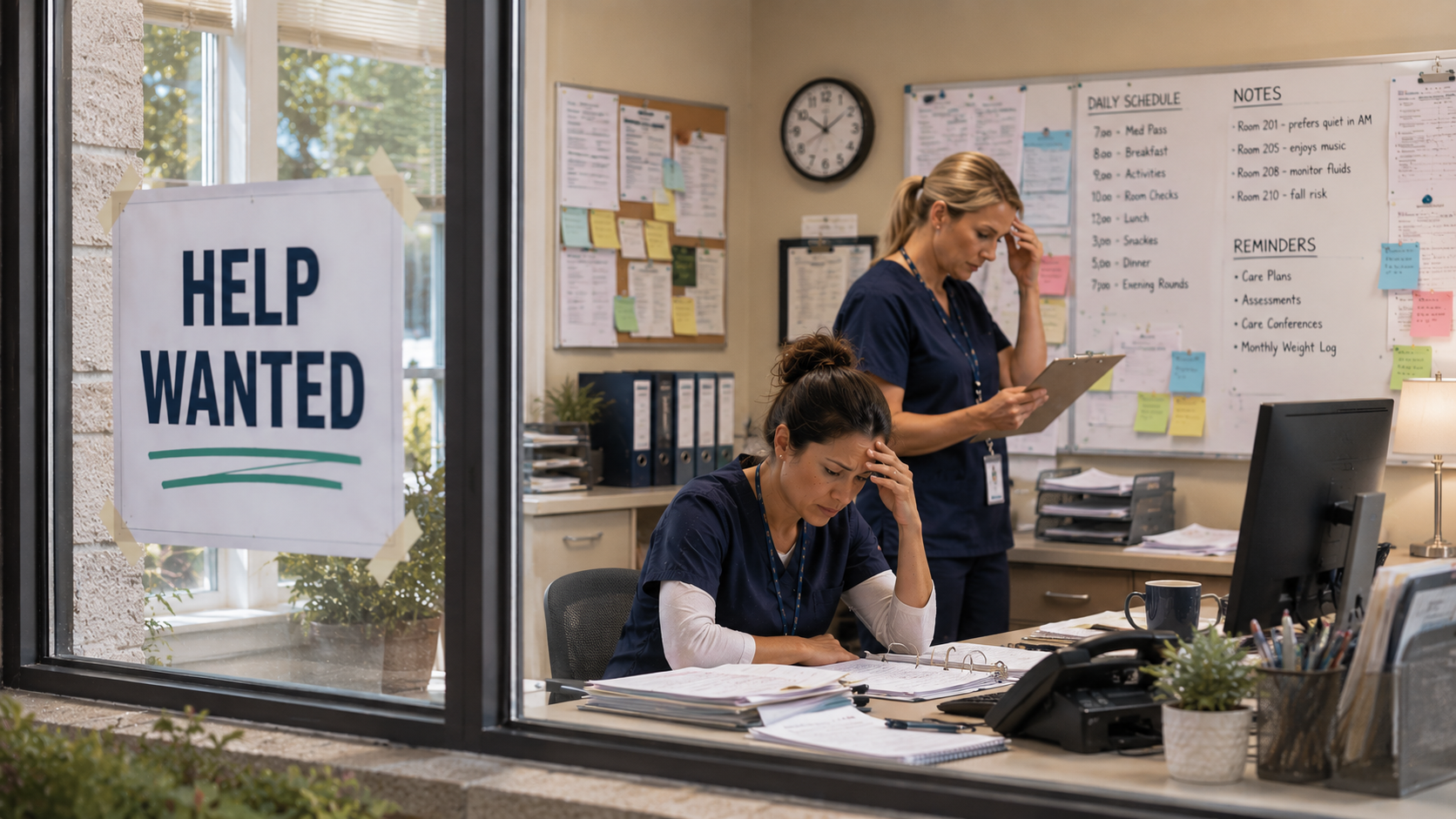
Few challenges dominate senior living leadership conversations today more than workforce instability.
Operators continue to grapple with persistent turnover, rising labor costs, increased reliance on agency staffing, and the ongoing challenge of recruiting and retaining employees capable of delivering high-quality resident care. Unlike many industries, senior living requires more than technical competence. Success depends on people who can build relationships, recognize subtle changes in resident condition, communicate effectively with families, navigate regulatory requirements, and contribute positively to the community culture.
Those capabilities are difficult to hire for, difficult to train, and increasingly difficult to retain.
Most discussions surrounding the staffing crisis focus on recruitment pipelines, compensation strategies, employee engagement, and retention programs. These are important conversations. But they often overlook a deeper and potentially more consequential issue.
Senior living’s staffing crisis is increasingly becoming a knowledge management problem.
Every employee departure creates more than a vacancy. It creates a loss of institutional knowledge. And in communities where critical information is fragmented across systems, departments, and individual employees, that loss compounds over time.
The concern is not theoretical. According to the 2025 Assisted Living Salary & Benefits Report, turnover across assisted living positions averaged 34.5%, while turnover among resident assistants and certified nursing assistants exceeded 40% (Senior Housing News). At those levels, many communities are effectively rebuilding portions of their workforce every year.
The result is a form of organizational “brain drain” that quietly undermines care continuity, operational efficiency, and resident experience.
The Hidden Cost of Turnover
The direct costs of employee turnover are relatively easy to quantify.
Communities incur recruiting expenses, onboarding costs, overtime hours, temporary staffing fees, and productivity losses while new employees learn their roles. Leadership teams can estimate these costs with reasonable accuracy and incorporate them into workforce planning efforts.
The more difficult challenge is measuring what walks out the door with departing employees.
An experienced caregiver understands far more than what appears in a care plan. They know which resident becomes anxious when routines change. They know who prefers quiet social settings versus large group activities. They recognize the subtle behavioral shifts that may signal an emerging health concern. They understand family dynamics, communication preferences, and the countless personal details that help transform care from a service into a relationship.
These insights are rarely documented comprehensively. Instead, they accumulate through daily interactions over months and years.
For residents, particularly those living with dementia, chronic conditions, or complex care needs, this knowledge can significantly influence outcomes and quality of life. When experienced employees leave, much of that understanding leaves with them.
The vacancy may eventually be filled.
The knowledge often is not.
Brain Drain Is a Resident Experience Problem
The senior living industry frequently evaluates turnover through an operational lens. Open positions create scheduling challenges. Staffing shortages increase costs. Recruiting consumes management attention.
All of these consequences are real.
Yet the impact on residents may be even more significant.
Senior living is fundamentally a relationship-driven business. Residents and families place extraordinary trust in the people who support them every day. Consistency matters. Familiarity matters. Context matters.
When turnover disrupts that continuity, residents often experience a subtle but meaningful decline in personalization. New employees may have access to assessments, medication records, and care plans, but they rarely possess the accumulated understanding developed through months of daily interaction.
As a result, communities can find themselves repeatedly rebuilding resident knowledge from scratch.
In an industry already challenged by workforce instability, this constant resetting of institutional memory creates friction that affects both residents and staff. New employees require longer onboarding periods. Experienced employees spend valuable time transferring knowledge informally. Families become frustrated when they feel compelled to repeatedly explain preferences or concerns.
The problem is not simply staff turnover.
The problem is the loss of organizational memory that turnover creates.
Why Fragmented Systems Make the Problem Worse
This is where staffing challenges intersect with technology strategy.
Most senior living communities operate using multiple disconnected platforms for health records, resident engagement, maintenance, communication, billing, and operations. Each system was typically implemented to solve a specific challenge, and many perform their intended functions well.
Collectively, however, they often create information silos.
Critical resident information becomes scattered across departments, applications, spreadsheets, emails, and individual employee knowledge. New hires must learn multiple systems to gain a complete picture of a resident. Managers spend valuable time searching for information rather than acting on it. Teams develop informal workarounds to bridge gaps between platforms.
In this environment, organizational knowledge becomes dependent on people rather than processes.
When employees leave, those informal connections frequently disappear with them.
The result is a cycle in which turnover increases operational complexity, and operational complexity makes turnover even more disruptive.
Operational Resilience Requires Continuity
Many operators view staffing challenges primarily as a workforce issue. Increasingly, they should also view them as a resilience issue.
Workforce volatility is unlikely to disappear in the foreseeable future. Demographic trends, competition for talent, and rising resident acuity suggest that staffing pressures will remain a defining characteristic of the industry.
The communities that thrive will not necessarily be those that eliminate turnover. Such a goal may be unrealistic.
Instead, successful organizations will be those capable of maintaining continuity despite turnover.
This is the essence of operational resilience.
Resilient organizations create systems that preserve institutional knowledge, standardize workflows, and ensure critical information remains accessible regardless of who is working on a particular shift or who recently left the organization. They reduce dependence on tribal knowledge and increase confidence that residents will receive consistent experiences regardless of staffing changes.
Technology alone does not create resilience. But technology can either strengthen or weaken an organization’s ability to preserve continuity.
A Different Way to Think About Technology
Historically, many technology investments in senior living have focused on solving discrete operational problems. One platform manages activities. Another handles maintenance. Another addresses communication. Another supports clinical documentation.
While these solutions may provide value individually, they often do little to address the underlying challenge of knowledge preservation.
A more strategic approach focuses on creating a connected operational environment where resident information, staff workflows, and organizational knowledge flow across departments rather than remaining isolated within them.
When information is unified, new employees can become productive more quickly. Care teams gain greater visibility into resident needs. Leadership can make decisions based on a complete picture of community performance. Most importantly, valuable knowledge becomes an organizational asset rather than an individual asset.
That distinction becomes increasingly important as workforce pressures persist.
The Question Worth Asking
Senior living leaders spend considerable time asking how they can recruit more effectively and retain employees longer.
Both questions remain important.
But another question may prove equally valuable:
How much of our organization’s knowledge would leave if several key employees resigned tomorrow?
The answer reveals far more than the health of a workforce. It reveals the resilience of the systems supporting it.
Staff turnover will continue to challenge the industry. But the communities best positioned for long-term success will recognize that preserving knowledge is just as important as replacing people.
Because in senior living, the staffing crisis is also a systems crisis.
CareSynchrony.ai is a Florida based technology company with a singular focus in helping senior living operators efficiently deliver personalized care for residents. The CareSynchrony® platform is a comprehensive, modular and fully integrated tech stack designed exclusively for senior living. Learn more.